If you run an ecommerce business, you’ve probably asked yourself, “How much does an ecommerce accountant cost?” Whether you sell on Shopify, Amazon, Walmart, or multiple marketplaces, managing your finances becomes more challenging as your business grows.
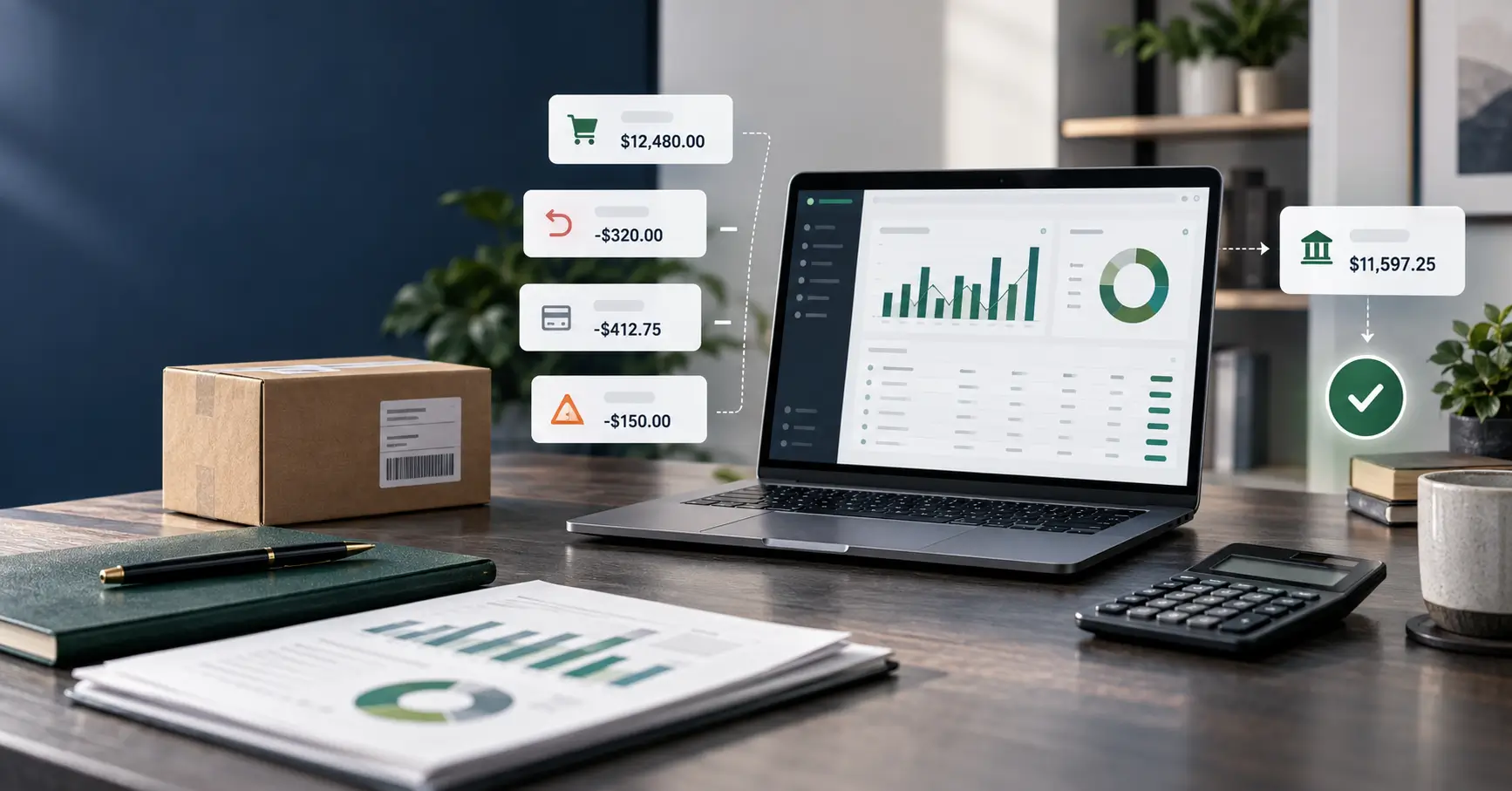
Unlike traditional businesses, ecommerce brands deal with payment processor fees, marketplace settlements, refunds, inventory, cost of goods sold (COGS), shipping costs, and sales tax across different states. Keeping these transactions accurate requires specialized accounting knowledge.
So, how much should you expect to pay?
In this guide, we’ll explain ecommerce accounting costs in the United States, what affects pricing, and what services you should expect before hiring an ecommerce accountant.
How Much Does an Ecommerce Accountant Cost?
Most ecommerce businesses in the United States spend between $300 and $5,000+ per month, depending on the complexity of their operations.
| Service | Typical Monthly Cost |
|---|---|
| Basic Bookkeeping | $300–$750 |
| Ecommerce Bookkeeping | $750–$2,500 |
| Full-Service Ecommerce Accounting | $1,500–$5,000+ |
| Fractional CFO | $3,000–$10,000+ |
The right package depends on more than just revenue. Transaction volume, inventory management, reporting needs, and the number of sales channels all influence pricing.
Why Ecommerce Accounting Costs More Than Traditional Bookkeeping
A local service business may only reconcile one bank account and send a few invoices every month.
An ecommerce business, however, often processes thousands of transactions through multiple platforms such as Shopify, Amazon, Stripe, PayPal, Klarna, and TikTok Shop before receiving a single bank deposit.
Every payout needs to be reconciled correctly by separating:
- Sales
- Refunds
- Discounts
- Processing fees
- Sales tax
- Chargebacks
- Marketplace fees
On top of that, inventory purchases, freight costs, product returns, and COGS must also be recorded accurately. This additional complexity is why ecommerce accounting requires specialized expertise.

What Determines the Cost?
No two ecommerce businesses are the same. Several factors influence how much you’ll pay for accounting services.
The number of sales channels is one of the biggest factors. A business selling only through Shopify is much simpler than one selling through Shopify, Amazon, Walmart, and wholesale accounts simultaneously.
Inventory complexity also plays a major role. Businesses with multiple warehouses, hundreds of SKUs, bundles, or Amazon FBA inventory require significantly more accounting work than stores with a limited product catalog.
Transaction volume, payment gateways, accrual accounting requirements, reporting needs, and the quality of your existing books also affect monthly pricing.
What Services Are Usually Included?
A professional ecommerce accountant provides much more than bookkeeping.
Most monthly packages include:
- Bank and credit card reconciliation
- Shopify payout reconciliation
- Amazon settlement reconciliation
- Stripe and PayPal reconciliation
- Inventory and COGS adjustments
- Monthly financial statements
- Month-end close
- Cash flow reporting
- Sales tax liability reconciliation
- Management reporting
More advanced packages may also include budgeting, forecasting, profitability analysis, KPI dashboards, and strategic financial guidance.
Bookkeeper vs Ecommerce Accountant vs Fractional CFO
Many business owners use these terms interchangeably, but they provide different levels of service.
A bookkeeper focuses on recording transactions, reconciling accounts, and preparing basic financial reports.
An ecommerce accountant goes a step further by handling inventory accounting, accrual adjustments, profitability reporting, month-end close, and financial analysis specifically for ecommerce businesses.
A Fractional CFO acts as a strategic advisor. They help founders improve cash flow, build budgets, forecast growth, analyze advertising profitability, and make financial decisions that support long-term expansion.
Is Hiring an Ecommerce Accountant Worth It?
For many growing ecommerce businesses, the answer is yes.
Without accurate financial reporting, it’s difficult to know which products are actually profitable. Many founders focus on revenue while overlooking merchant fees, shipping expenses, advertising costs, and inventory purchases that reduce profit.
A specialist ecommerce accountant helps you understand:
- Your true profit margins
- Cash flow position
- Product profitability
- Inventory performance
- Financial trends
Better financial visibility allows founders to make more confident business decisions and avoid costly mistakes.
When Should You Hire One?
You should consider hiring an ecommerce accountant if:
- Your annual revenue exceeds $500,000.
- You sell through multiple channels.
- Inventory management has become difficult.
- You don’t know your actual monthly profit.
- Shopify or Amazon payouts don’t reconcile properly.
- Tax season is becoming stressful.
- You’re planning to scale your business.
The earlier you establish accurate financial systems, the easier it becomes to grow sustainably.
How to Choose the Right Ecommerce Accountant
Price shouldn’t be the only factor when selecting an accounting partner.
Instead, look for someone with experience in:
- Shopify
- Amazon FBA
- QuickBooks Online
- Stripe
- PayPal
- Inventory accounting
- COGS
- Sales tax
- Ecommerce KPI reporting
Ask whether they provide monthly financial reviews and strategic recommendations rather than simply preparing reports.
The right accountant should help you understand your numbers—not just record them.
Why Ecommerce Businesses Choose AYBE Finance
At AYBE Finance, we specialize in helping US ecommerce brands gain complete financial visibility.
Our services include:
- Ecommerce bookkeeping
- Shopify and Amazon reconciliation
- Inventory & COGS management
- Monthly financial reporting
- Cash flow forecasting
- KPI dashboards
- Fractional CFO services
Our goal isn’t simply to keep your books organized. We help founders understand where they make money, where they lose money, and how to make better financial decisions as they scale.
Whether you’re running a fast-growing Shopify store or a multi-channel ecommerce business, we provide accurate financial reporting designed specifically for ecommerce operations.
Frequently Asked Questions
How much does ecommerce bookkeeping cost?
Most ecommerce bookkeeping services range between $300 and $1,200 per month, depending on transaction volume and business complexity.
Is an ecommerce accountant different from a regular accountant?
Yes. Ecommerce accountants understand marketplace settlements, payment processors, inventory accounting, COGS, and ecommerce-specific financial reporting.
When should I hire an ecommerce accountant?
Most businesses benefit from hiring one once they exceed $500,000 in annual revenue or begin selling through multiple channels.
Can an ecommerce accountant improve profitability?
Yes. By providing accurate financial reporting, inventory management, cash flow forecasting, and profitability analysis, they help business owners make more informed decisions.
Does Shopify require specialized accounting?
Yes. Shopify payouts include sales, refunds, discounts, payment processing fees, and taxes that must be reconciled correctly to produce accurate financial statements.
Final Thoughts
Hiring an ecommerce accountant is an investment in better financial visibility rather than simply an accounting expense. As your business grows, accurate bookkeeping, inventory management, and strategic reporting become essential for making confident decisions.
While pricing varies based on the complexity of your business, choosing an accountant who understands ecommerce can save you time, reduce costly errors, and help you improve profitability over the long term.
If you’re looking for an accounting partner who understands Shopify, Amazon, inventory, and ecommerce financial reporting, book a free 20-minute Ecommerce Financial Review with AYBE Finance and discover how better financial insights can support your business growth.