DIY Bookkeeping Ecommerce USA: Why Many Businesses Choose It
DIY bookkeeping ecommerce USA is a common approach for new and growing online businesses. Many ecommerce owners prefer to manage their own books to save money and stay closely connected to their numbers. In the early stages, this approach may seem practical, especially when transaction volumes are low and operations are simple.
However, as your business grows, financial complexity increases. Managing multiple sales channels, payment processors, inventory systems, and tax obligations requires more than basic bookkeeping knowledge. What starts as a cost-saving decision can quickly become a risk to your business.
DIY Bookkeeping Ecommerce USA: The Hidden Risks Behind It
While DIY bookkeeping ecommerce USA may appear manageable, it often leads to errors that go unnoticed. Ecommerce businesses deal with high transaction volumes, multiple revenue streams, and various fees that must be tracked accurately. Without a structured system, it becomes difficult to maintain clean and reliable financial records.
Mistakes in categorizing transactions, recording revenue, or tracking expenses can distort your financial reports. This lack of accuracy affects your ability to make informed decisions and can lead to costly consequences over time.
Incorrect Revenue Recognition and Shopify Payout Confusion
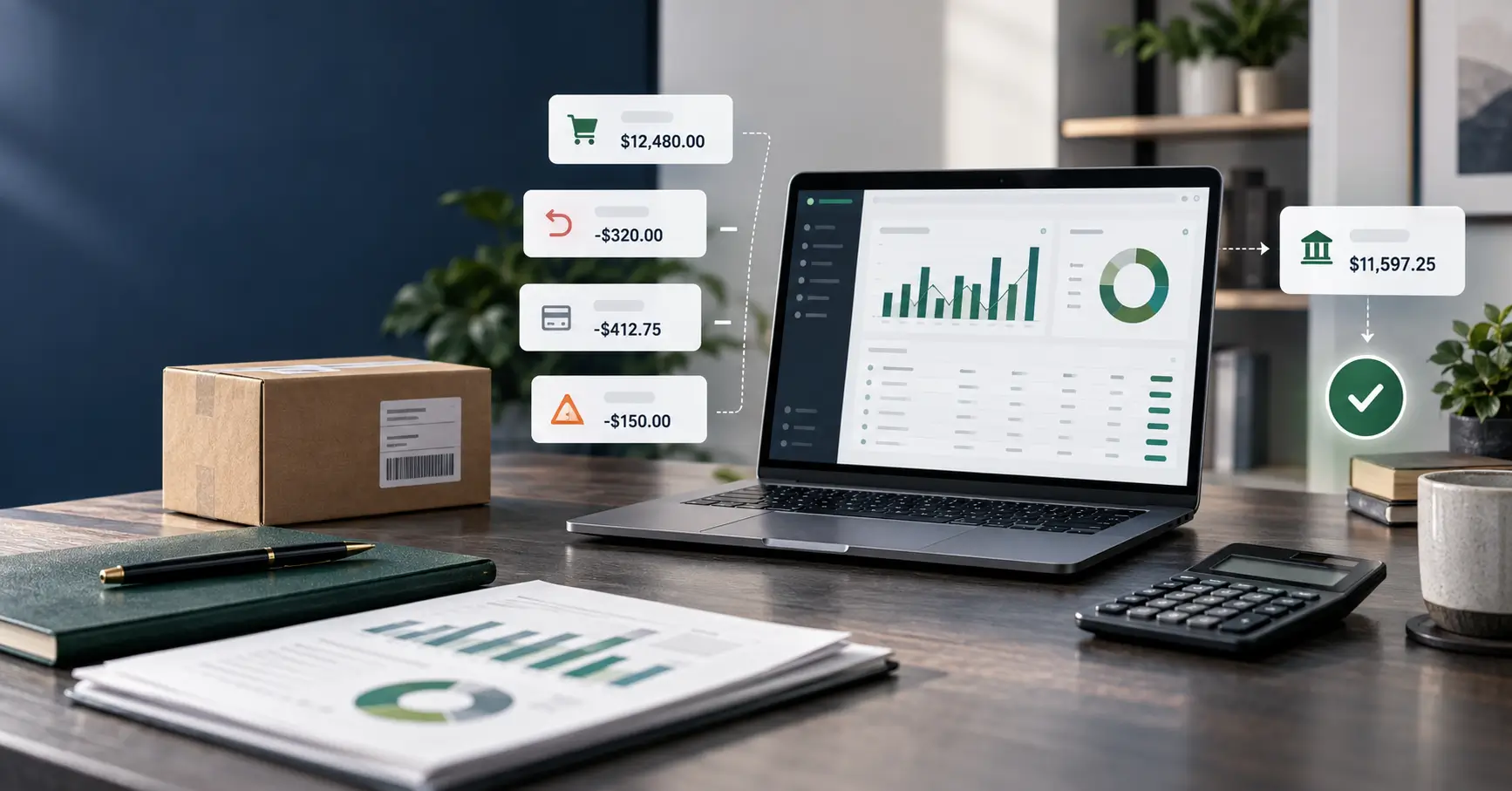
One of the most common issues in DIY bookkeeping is misunderstanding revenue. Many ecommerce owners record Shopify payouts as revenue, which is incorrect. Payouts include deductions such as payment processing fees, refunds, and adjustments.
This leads to inflated revenue figures and inaccurate profit calculations. Proper bookkeeping requires separating gross sales from deductions to reflect true financial performance. Without this clarity, business decisions are based on misleading data.
Failure to Track All Costs Accurately
Ecommerce businesses have multiple cost components, including cost of goods sold, advertising expenses, shipping, and operational costs. DIY bookkeeping often fails to capture all of these elements correctly.
Missing or misclassifying expenses results in overstated profits. This creates a false sense of financial stability and can lead to overspending or poor investment decisions. Accurate cost tracking is essential for understanding real profitability.

Sales Tax Compliance Risks in the USA
Sales tax compliance is one of the most complex aspects of running an ecommerce business in the USA. DIY bookkeeping ecommerce USA often overlooks nexus rules, state-specific requirements, and filing deadlines.
Failure to comply with sales tax regulations can result in penalties, interest, and legal complications. Without proper systems in place, it becomes difficult to track taxable sales and manage compliance effectively.
Lack of Regular Reconciliation
Reconciliation is a critical process that ensures your financial records match actual bank and payment data. Many businesses practicing DIY bookkeeping skip this step or perform it inconsistently.
Without regular reconciliation, discrepancies go unnoticed and accumulate over time. This leads to inaccurate financial reports and reduces trust in your numbers. Reliable data is essential for decision-making, and reconciliation ensures that accuracy.
Limited Financial Insights and Decision-Making
DIY bookkeeping typically focuses on recording transactions rather than analyzing financial data. As a result, ecommerce owners lack the insights needed to make strategic decisions.
Understanding metrics such as profit margins, cash flow, and customer acquisition costs requires more advanced financial analysis. Without these insights, businesses struggle to optimize performance and scale effectively.
Time Cost vs Financial Risk
Many ecommerce owners choose DIY bookkeeping to save money, but they often underestimate the value of their time. Managing bookkeeping tasks takes time away from core business activities such as marketing, product development, and customer experience.
In addition to the time cost, the risk of errors can lead to financial losses that far exceed the cost of professional bookkeeping services. What seems like a saving can ultimately become an expensive mistake.
How Professional Bookkeeping Solves These Problems
Professional bookkeeping provides structure, accuracy, and clarity. Experienced bookkeepers understand ecommerce-specific challenges and ensure that all financial data is recorded correctly.
They handle revenue recognition, expense tracking, reconciliation, and compliance, allowing you to focus on growing your business. More importantly, they provide insights that help you make informed decisions and improve profitability.
Conclusion: DIY Bookkeeping Can Cost More Than It Saves
DIY bookkeeping ecommerce USA may work in the early stages, but it becomes increasingly risky as your business grows. Errors in financial records, compliance issues, and lack of insights can hinder your ability to scale and impact your profitability.
Investing in professional bookkeeping is not just about accuracy—it is about gaining the clarity needed to make better decisions and build a sustainable business. In a competitive ecommerce landscape, financial clarity is a key advantage.
Need Help with Your Bookkeeping?
At AYBE Finance, we help ecommerce businesses in the USA:
We clean up your books, ensure accurate financial tracking, manage compliance, and provide CFO-level insights to support your growth.
Book a Free Consultation
Or download our Ecommerce Financial Guide to get started.